Why Your Boat Keeps Tripping The Shore Power GFCI
Transcript is auto-generated.
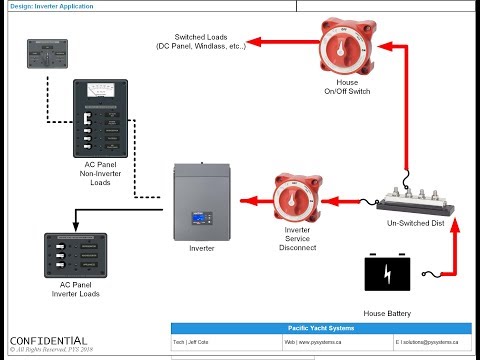
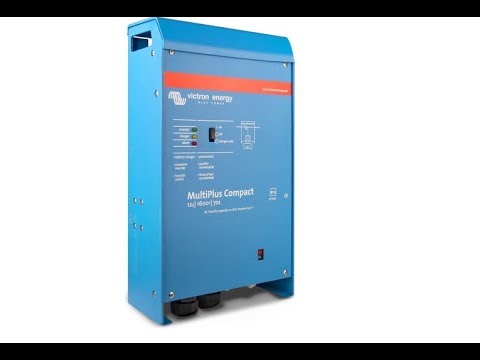
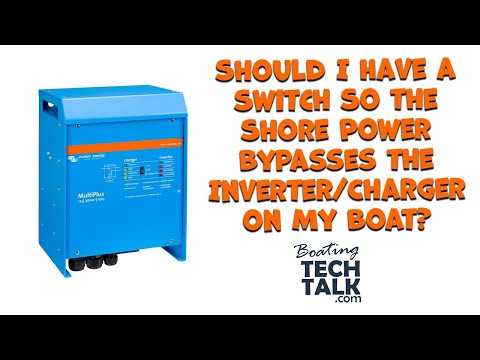
Getting frustrated because the GFCI at the marina pedestal keeps tripping? Here's my opinion of why this might have happened on your boat. We have a big announcement. You can now become [music] a YouTube member. You can join as a YouTube member right now here on screen for custom loyalty badges [music] and emojis. Or if you are looking for exclusive early access to our videos, live Q&A's, and more direct [music] support on your project, we also launched our brand new Patreon page linked in the description below. Thank you so much for watching [music] and being part of the Pacific Yacht Systems community. Now, let's get back to the video. Hi everyone, Jeff Cote here with another installment of Tech Talk. We've got a question from Kevin. Kevin's got a a Bayliner Sedan Bridge a 480. And he asked, "Jeff, my Victron 2 MultiPlus uh keeps tripping the breaker at the shore pedestal whenever we plug in. And I'm wondering why this happens on my boat. Is it the inverter the problem or what's going on?" Well, Kevin brings up a good point, especially for some of you that connect to marinas that have either an ELCI or a GFCI at the dock that supplies power to your boat, you might encounter this problem. But, we have a few marinas in our local waters that have this type of setup. My number one sort of culprit in this situation would be the fact that I would if I was talking to Kevin, I would really make sure to Kevin and ask him are his inverter neutrals separated from his main AC neutrals. Uh there's many ways of installing an inverter. One simple way, which is albeit rare, is to have all loads in the boat, regardless if they're powered by the inverter or not, to go through the inverter. Meaning, you could literally have a battery charger that is pass-through on the inverter. You could have a hot water tank. You could have every single AC device on your boat powered through the inverter, which obviously you don't want and so you'd have to manually select what loads are going in or not. Like when you're on inverter, you'd have to absolutely avoid having the inverter powering your battery charger, obviously. So many of us on boats are going to find ourselves with what's called inverter only loads. So meaning your AC panel is divided into parts. Loads that run only from shore power and loads that can run from shore power or the inverter. And the moment you separate loads into two parts, meaning loads that can be powered from shore power only and shore power and inverter, you need to have two neutral buses. So, this is the problem is that often you won't realize you have this problem because when you connect in a marina that has a pedestal without a GFCI, you're not going to know. But GFCI's obviously are looking at balance of the legs. They want the hot and the neutral to be within 5 milliamps of each other and if there's an imbalance of the legs they're saying that obviously there's leakage, it's going to ground and if it's going to ground, they're going to basically trip the circuit which is going to be a problem because you're not going to be able to connect to shore power. So what I would say to Kevin is be curious and on his boat, I would ask him to check if basically does how is your inverter wired on the AC side? Does it power all AC devices on your boat, meaning you could get away with a single inverter bus? Or do you have an inverter that's only powers a subset of your AC loads and then you should have one neutral bus just for AC loads that are connected from shore power and then another neutral bus that is for AC loads that are powered either from shore power or the inverter. And the reason why this is often overlooked is that AC neutrals on boats are rarely labeled. And so, they're all common on a bus, and it's very time-consuming to separate neutrals into two different buses. And often that's overlooked when inverters are installed. And in my opinion, I'm not saying it's the reason, but it's the most likely cause of the issues that Kevin is encountering with a GFCI tripping on his boat. So, that's where I would recommend Kevin looking. By the way, this is not a brand-specific problem. This is not a Victron or Xantrex or a Magnum or any type of manufacturer problem. This is simply a problem with having a neutral bus bars not installed for dedicated inverter loads. So, this used to happen on older inverters, it's happening on new inverters. The issue is not really on the inverter, the issue is generally related with not having two separate neutral bus bars. Inverters are one of these devices that are pretty time-consuming to install and to do right. If you're curious, check out the links below on how to properly install an inverter on your boat or making sure that it's actually properly installed. Thank you so much for watching, and be safe on the water. Hey fellow boaters, we're going to be doing a lot more tech [music] talk videos. If you've got any suggestions for future videos, leave them in the comments below. Once again, thank you for watching.