We Answer Some Of The Most Asked Questions From Our Viewers!
Transcript is auto-generated.
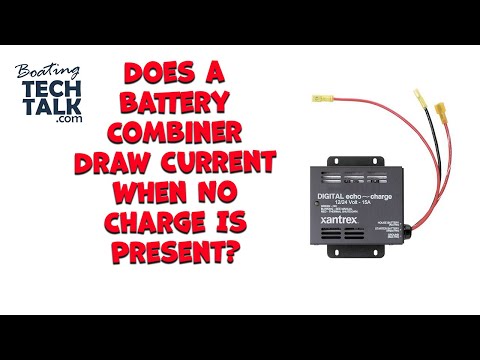
Hey everyone. Uh we're here a little early. Uh we've got a couple minutes or 1 minute until 4 [music] o'clock. Uh which is really depending on different time zones. [music] We've we've cut off uh daylight time zones here. So [music] our 4 o'clock is not Pacific anymore. It's really changed a little bit. Welcome everyone online. We uh for the format what we're going to be doing today is uh we've got some questions that have been submitted by some members already ahead of time. And so we do have uh questions to get us started. But I welcome everyone uh to join in in the chat and to share and to give input um on what's working, if the audio's not right, or if we're the questions are too long, too short, feel free to share. Uh this is really sort of a community event to give everyone an an opportunity to maybe ask questions. Of course, as I normally do, I'm going to have the questions. I try to tailor my answer to be as general as possible with also being specific so that it might apply to many of us out there as boaters that are trying to make sense of the electrical system on our boat. So that's really the intent. I'm going to wear my glasses a little bit um just so that I can read because I'm getting older and I can't see small text anymore. But with that maybe we're going to get started uh with a question that we had from a fellow boater. Um Robert G asks, Jeff, can I switch to a lithium uh battery bank using just a DC to DC charge charger or do I need an external alternator regulator? All right. So, uh Robert asks uh a question that I think most of us should consider when we're actually contemplating changing over to a lithium battery bank system on our boat. The reality, and this is important for us to remember, is that unlike lead acid batteries, uh either flooded, AGM, or gel, a lithium uh battery bank wants a specific, very specific charge profile that is quite different from a lead acid charge profile. And so when one of us is considering putting lithium on our boat, well, the question is going to be how we're going to recharge it. So of course, on the AC side, when connected to shore power or having a generator, you're going to want to have a gener- a battery charger that is compatible to lithium. And that should, you know, something you can look in your specs and you might have an existing inverter charger that is compatible, or you're going to want to buy an inverter charger that is, or a battery charger that is. But many of us also want to have uh the ability to recharge our batteries while underway. So while underway, uh you're going to be using an alternator. Now, the alternator, most of us, including the cars we drive and the trucks we have and even for RVers, most of us, including boaters, have what are called internal regulated alternators. Meaning the output of the alternator is pretty unsophisticated uh and I would say overly cautious, so you're not getting a high output. And uh that's the standard alternator output. And so now that's made for a basically a flooded lead acid battery. And generally, you know, the alternator is connected to the starter solenoid, which is connected to the starter battery. So Robert asks, well, what do I need to do, Jeff? Do I need to Can I get a DC to DC charging uh converter to connect my engine battery to my house battery so I can share that charge? Or do I need to actually get a uh external regulator, like for example a wake speed, which I have on my boat? Um and Balmar works as well. And have an external regulator sort of like modify the alternator output so it's tailored, right? Customized to exact exactly the needs you uh have for your lithium battery bank. Well, the good news is you don't need to have an external reg an like an advanced external regulator connected to your alternator. Now, of course there's reasons why you would want to do it, but need to do it? No. Many many boaters have gone especially if your lithium battery bank is not all too big and you can use your stock alternator, right? And so your lithium battery bank is not huge because there's a question as well of undersizing an alternator for a lithium battery bank. But that's not the question. So but it's something to consider. Uh you could have for example a you know maybe let's say it's a 200 amp hour uh lithium battery bank, right? Or maybe even 100 amp hour lithium battery bank and you have a stock alternator, maybe it's a 90 amp stock alternator and that's going to really output about 60 amps. You could put in a DC to DC charging converter, let's say a 30 amp or a 50 amp model uh that would share and then that would be between your engine battery and your house battery and that DC to DC charging converter uh would be customizable to have the output of the DC to DC to be exactly what you need for your lithium battery bank. Now, you would want maybe that charger, that DC to DC charging converter to only obviously charge your lithium battery bank whenever the alternator is working. So there's ways around doing that. You can do it either manually, you can do it with maybe sensing when the ignition wire on your engine is on and maybe you want to put a delay so it doesn't start charging right away, but it might delay like 60 seconds. So there's different things you can program to maybe make this more automated in terms of sharing your alternator, stock, internal regulator uh with your lithium battery bank, but that's more advanced. But in short, yes, you can do that. Now, to Robert's question, the reason why some folks would consider an external regulator is because you're going to get more out of your alternator. And in that instance, then you would reroute your alternator output from your starter solenoid, which is where it's connected on pretty much every engine, and you would reroute your alternator directly to your house battery bank. And then you would use a DC to DC charging converter at a lower amperage. That's what I did on my boat, maybe at 30 amp, and you would share your lithium house battery charging voltage back to your engine. So either way, realistically, you're going to get a DC to DC charging converter, either from engine to house if you have an internal regulator. But if you have an external regulator, more more likely than not, your alternator is going to be connected to your house battery, and then you would have it the other way. So in short, a DC to DC charging converter is pretty much something that most of us are going to have installed on our boats if we have lithium, either to go from engine to lithium or from lithium back to engine. So that would be the question the answer to Robert's question. All right, I'm going to put my glasses to read some of those posts because I've been seeing there's a lot of stuff coming on. Um so let me just uh do a quick zoom here. Um hey from Brooklyn, New York. That's awesome. Cape Canaveral, been there, saw uh went to the saw the shuttles, incredible. Absolutely Ottawa, wow. You guys are awesome. Um my god, Thailand at the moment, Great Britain. That's incredible, guys. Uh thank you, thank you so much for being here and uh sharing your passion a little bit for uh marine electrical. All right. Um let me see if I've got more questions in the chat. I've got you stay in the Oh, okay. All right, I've got a question from uh Don Robertson. Um all right. So I mentioned in a recent video and I talked and this is very important. So tune in, especially if you have flooded lead-acid batteries, okay? So lead-acid come in various variations, flooded, AGM and gel. Gel is pretty rare, but really there's really popular is really two types, flooded and AGM. If you're using you generally never ever want to use like when you buy a flooded lead-acid battery, you can actually buy it for a purpose. You can either buy it for a starter battery, for a deep cycle battery or a dual purpose battery. Dual purpose would be like all season tire, neither for summer nor winter, but sort of like a compromise for everything. In most cases what I tell people is you should always buy if you're buying flooded, you should always buy the right battery for the right job. So if you've got a basically you're using a battery bank for starter application, thrusters, windlass, that battery should most likely be a starter battery which is high high current for short periods of time. A deep cycle battery is low discharge for a long period of time. And the the point I was making and I've seen this happen is I've seen starter batteries flooded lead-acid use in deep cycle deep cycle applications and it's led to a catastrophic failure of the battery. The battery actually exploded. So you never ever want to use a flooded lead-acid battery starter in a deep cycle application. You could use a deep cycle battery in a starter application. The challenge is you're just not going to get the cranking amps you would out of a starter battery. So if it's a thruster battery bank or if it's a windlass windlass is not too big, but if especially for starters or thrusters, you probably want to use a starter battery for those so you can get high amperage for shorter period of time. Now that advice changes if it's an AGM battery. An AGM battery is quite good at both. You can have a really good AGM battery for starter and an AGM battery for deep cycle. So this is where the delineation and my advice changes. And if you have an AGM battery, you can definitely use an AGM battery for starter and an AGM battery, the same AGM battery for deep cycle. So an AGM is not I'm not saying it's better than a starter battery flooded, but it's a really healthy compromise. And many of us boaters are going to find ourselves with AGM batteries that can do the job of both starting and deep cycle very well. So it's a it's a good sort of a compromise battery. [clears throat] All right. Wow. Panama, Southern Pennsylvania. Love it. All right. I wasn't sure anyone would join in to be honest. I'm excited. This is great. I love this. Rhode Island, Long Island, my god. All right. All of us are real boater boaters geeking out. Uh let me see here. Uh All right. Just a quick word before we get back to the video. If our videos have ever brought value to your time on the water or has helped you on a project, please consider supporting the channel [music] either on Patreon or by joining as a YouTube channel member. Your membership directly supports us and allows us to produce more of the content you love. All the information to join will be in the description below. And to everyone already backing us, thank you. We genuinely appreciate you supporting us. Now let's get back to the video. All right. So we've got a question if you guys can read in the chat by Gregory. So he's got a 2003 Catalina. He's got a 24 uh 25 horsepower engine and he's got two lithium batteries that were added by the prior owner, right? Happens. Uh they're on the house switch, right? And honestly, on a lot of Catalinas and I I would question Greg, maybe you can confirm that Gregory, is it the house switch or is it sort of the switch? Because on my Catalina, it was really a switch for all. Like so I had an off one two both switch. And really that switch was a switch that would do both the engine loads and the household all at once. But assuming that it's specific to what you said and just a house switch, so you have it basically a source selector where you have two batteries. Yeah, it doesn't So Gregory's concerned that he's got two lithium batteries but nothing not a lot was done. So the question would be if you've got two lithium batteries on your house, what's recharging your engine battery, right? And that's probably your alternator and probably probably a charger. And if you're going to have two lithiums on your house, so some boats have this sort of concept and this used to be popular certainly in the early 2000s where you would literally have two house battery banks. You would have an engine battery and two house battery banks. If I had two lithium batteries on my boat and I didn't install it or I didn't know really, the questions I would ask myself is well, how are my two lithium batteries getting a charge when connected to shore power? And do I have another battery bank either flooded or AGM for engine? And how are those because you can't really have a battery charger that outputs flooded lead acid on one leg and then lithium on the other and lithium on the third, right? You basically set the profile and say I'm going to have a battery charger that does lithium, flooded lead acid or AGM, but you don't really get to pick and choose the output on every single leg of the battery charger. So that would be one of the questions that I would ask myself if I was Gregory. I'd look into that. The other thing I would also consider would be how is my alternator recharging my house batteries, right? And generally this is this happens all the time, you know, battery manufacturers want to sell batteries. And the easiest thing to tell us is that and they've used this they've coined this term drop in replacement. So meaning you don't have to worry about anything, don't worry, just buy my batteries, it's going to work. I would read the fine print on the batteries and maybe they promise that, but maybe sometimes they're going to say well, yeah, it's drop in replacement, but ideally you'd want to do X. So I would be curious on the batteries that I have on board and ask myself what is the sort of charging ideal requirements that they would like. And if they want something that your alternator is not outputting, for instance at 13 4 to 14 4, right? And it and it maybe want a higher voltage or a lower voltage, it might only want 13 9, then I would consider getting DC to DC charging converters to go from my engine battery to my house battery so that I can have my lithium batteries get the exact right charge. [sighs] You know, sometimes unfortunately people don't tell the whole story in what they are selling and it's important for all of us, and that why we're here, to be curious. So I'm not trying to make a meal out of it, but I would be curious and ask myself, well what do that battery exactly want as opposed to saying it's going to work off a standard internally regulated alternator. And that's what I would look into. So that's my answer to Gregory's question here. All right. Oh, Gregory answered. One second. Yeah. So Gregory said yeah, he's got an engine that is lead acid, which is what I assumed, and a Victron charger set for the lithium. So I would, Gregory, like I said, I would worry how am I getting my alternator, which is charging your engine battery which is lead acid, to recharge your lithium battery bank. And the easiest way to do that would be the same answer I gave Robert at the beginning of the of the this live stream. You would do that with a DC to DC charging converter. And that way you would give the lithium battery banks exactly what they want. Now you might not need to do that. Where I would start is read the fine print on those batteries and ask yourself, is there something I what is it that those batteries actually really want and what am I giving it with my internally regulated alternator? And if the gap is quite different, then I would do DC to DC charging [clears throat] Point of interest. We've always and this sort of like maybe a philosophy, right? Um a mantra. In all the lithium battery banks that we've done, we've always tailored the charge to exactly what they want. We either program it, but we try to give the batteries, the lithium batteries exactly what they want uh so that they never shut down because of the BMS, because of overcharging. Because sometimes you see what can happen is it's the batteries, let's say for against, we're not saying that the batteries are going to be unsafe. I'm not saying about electric fire. I'm not trying to put fear in everyone. But if you're underway, and this is I've seen this happen to other boaters, you're underway and you're on a long run. You're motoring for a long period of time. And eventually the BMS can't take a charge anymore. And your alternator is still outputting a high voltage, 14 4. You're running your engine at 2100 RPM. Your engine battery is full. Your lithium batteries are full. And you're still outputting a high charge. The lithium battery might do what I've seen happen on other boaters. If the BMS is I can't take a charge anymore, and it's going to shut the battery down. Now the challenge with that is whatever loads are going to be on that lithium battery bank, let's say your chart plotter, your radar, your nav lights, whatever it is, are also going to go down. So I've seen instances where lithium batteries protect themselves, which is great. They don't they don't explode. They don't catch on fire. No, everything's great. But what they do is they stop the charge. And by doing that, they shut down themselves. And so because drop in batteries generally don't have a charging bus and a load bus, they just have one single post for all, then you end up losing your battery. And losing a battery on a boat is a big deal. Not always, but certainly sometimes. So that's the reason why I think it's important for all of us to give the batteries exactly what they want and to consider scenarios that might not have happened on your boat, i.e. running the engine for 10 hours with the batteries charged. And what would happen in that instance? And would the battery's BMS disconnect the battery and not only would you stop charging, but you would also stop being able to discharge the battery with the loads. And that would be a big problem. Okay. All right. Let me see here. Um. Oh, Bristol Channel Cutter. Yeah, amazing boats. I've worked on a few. I'm glad that our content is helping. Um, that's awesome. Okay. All right. So I've got a question from Ian. He says, I've got two 560 amp hour lithiums on our sailboat. I need a wire diagram in my sailboat. Listening to your feeds, I've made mistakes, not many, but I think I missed the type T. Yeah. Listen, you know what? I've made on my boat, I'm serious, it's it's dozens and dozens and I'm probably my ego doesn't want to hear hundreds, but it's probably hundreds. We've all made mistakes. I mean, I I've been there, right? The life is a journey and with ups and downs. The good the good news with all of this is uh to care, to improve it, right? There's nothing worse than to make a mistake and ignore it and to pretend otherwise uh just so that we can protect our egos um from saying we made a mistake. We learn from it. Um, you know, like my electrical on my boat, I think about when I started and I got my boat in 2006, the number of iterations and evolutions I've done with my boat. Another way to look at it would be errors, right? You could be critical about yourself and say, well, why didn't you do it perfectly the first time or the second time? Well, you know, things change, I evolve, I grow, I learn, and I think all of us are trying to do the same thing, right? Like make our boats simply better. And yeah, of course, you can say I made errors, but I wouldn't even use that way. It's like, no, you're certainly just making it better and um less negative toward oneself. And the flip side it is it's like maybe we're more willing to look for other areas of improvement of things that we've actually done because it's easy to correct other people's mistakes and that always feels good. But sometimes the mistakes come from ourselves and I've done more than my share fair of that and then I'm like no problem, you know like okay I learned something. Yeah I can be better and doing this on this forum or this event and other YouTubers and books and people and trades is all a journey on making the electrical systems on our boat safe and reliable is really the goal. So yeah I mean it's a journey. It's really a journey. All right I want to have Okay so that's a cool question from Ocean Post. I want a way to check if my alternator is working i.e charging. Is there a Victron thingy I can see from the bridge if it's charging versus my solars? Okay. I love Well all right. So all right. It's important and I would say actually paramount for all of us to be curious that our alternator is functioning when after we start our engine. So regardless I'm not even talking about monitoring and putting expensive stuff on the boat like I'm going to go back to just the basics. All of us prior to starting the engine should look at the battery engine voltage, right? Assuming your alternator is connected to your battery engine which is not always the case but or look at whatever voltage the alternator is connected to. That's probably the accurate statement and for most of us it's going to be the engine battery. But on my boat like for example it's on the house but you know like say 95% 98% of us are going to have the alternator connected to our engine battery. So first question you got to answer is where my alternator connected? Most likely it's the engine battery and if you've had your boat modified or improved it's could be the alternator, if the house. Check the voltage prior to starting the the engine. Now, of course, when you're going to start the engine, you're going to see a voltage drop. You know, maybe your battery at rest is 12.8 uh maybe there's a solar on it, it was 13.3 floating voltage. Maybe it was even you just connected shore power, your battery charger was on uh and maybe it was floating at 13.8 and there's no loads on it. But as soon as you're going to like you want to see whatever that battery voltage is and generally if static voltage on a lead acid or AGM battery is going to be 12.8 maybe 12.9. Obviously, you're going to start the engine or turn on the glow plugs and that voltage is going to drop, right? It's going to drop to depending if you've got glow plugs or not, but the voltage is going to drop to 11 V 10 1/2 V And after a period of time what you can you can actually and this is something we can all see because we all have a voltmeter on our engine battery. We should all have at least a voltmeter. You want to see that battery voltage go from 12.8 or 13.1 and you want to see it go back to at least 13.4 and then honestly as you rev up the engine, maybe you bring up the engine from 800 RPM and you bring up to 1,200 or then forget 1,200 for sure, no problem. 1,600 is like easy. You want to see that voltage go up to at least 13.4 or 13.6 and eventually depending on if you're sharing that voltage with other batteries or that charge with other batteries, you want to see a delta. You want to see where it was before you started. It's going to dip while you're starting the engine and then you don't want it to go back to 12.8 or 12.7, you want it to see go higher. And that would be a way to confirm that your alternator is outputting from a voltage perspective. Now, if you're curious and you want to know what your alternator is outputting in terms of amperage and check I was there, you know, that's what I wanted to know. I just didn't want to know that it was working. I wanted to know how how much it was working. There are and there's ways to integrate, depending Wake Speed has that. There are ways or even external third-party uh sensors, which I ended up doing on my boat, as sensors that you can actually measure the output and capacity of your alternator. So not only do you know what the voltage of it is, right? At the battery, you can even see some monitoring like I have a Wake Speed Bluetooth. I can see the voltage at the alternator, so I can see it being, I don't know, to whatever I had set it, 13.9, 14.4, whatever it is. But I also see the amperage coming out of the alternator. Now that's a little bit more geeky. I'm not saying it's something that all of us want, but if that's something you want to chase, it's definitely doable, and I did it on my boat. Of course I did because I'm geeky like that. But the first advice that I gave in, which is critical, is all of us should care to see that the voltage on our engine starting battery or the one that's going to receive the alternator charge, including the house, is going to have a jump once the alternator is running. And if you don't see that jump, then it's you have a problem because there should the alternator should make a difference, right? It you should see a difference in terms of the voltage once the alternator. Now some alternators don't start right away and they might start they might wait at like a 30 seconds or 60 seconds, so you might have to wait a little bit. And some alternators barely output at low RPM, 800, 900, you know, on a diesel engine, 1,100. But once you're at like 1,400, 1,500 or 2,100 RPM on a diesel engine, your alternator is not I'm not saying max output, but it's pretty damn near there. And so especially if you have the right ratio on the pulleys, and so you should see a discernible difference on the voltage of where the alternator is connected to. In most cases, the engine battery, and in some rare cases like myself and some other boaters that have had upgrades done, it might be connected to your house. So that's what I would advise all of us to check. Be curious as everything. All right, so that's my question to Ocean Pose. All right, let's go. Just want to take a second and give a quick heads up. If you're in the market for new marine electronics or equipment, check out rotanmarine.com. From [music] watermakers to navigation equipment, they got it all. And every purchase from them helps us produce more videos and helps the channel grow. So thank you for supporting us. Now let's get back to the video. I don't have Dustin Thank you for the feedback and I'm glad our our videos have helped you make your boat better. I don't have an opinion on the Cirix-CT as a battery combiner. I have not used that product and I don't have an opinion on it. So sorry about that. Not familiar with that one. All right. Okay. What else here? Oh, okay. So we got a question from Dennis. Dennis is from the Detroit area. He asked, why is it necessary to have an ELCI installed on a boat that only has a battery charger run off from shore power? Well, that's a pretty simple AC system, right? A battery charger. I feel like it depends on their jurisdiction, right? When you're doing an AC system on a boat, there's no delineation, especially here, for recommendations between I'm running this load and therefore my AC system is different. And if I'm doing these sort of loads, then it's a different AC system. It's really like a one size fits all. All right. So let's back off and say and I should have just what is an ELCI? An ELCI is pretty similar to a GFCI, which is a ground fault circuit interrupter if I get the acronym right. Someone wants to correct me because sometimes I make these stupid mistakes all the time. Now, besides getting the acronym spelled out, what does a GFCI do? A GFCI is a device that measures uh for a imbalance uh between the neutral and the hot. So meaning if you have, I don't know, 5 amps going in on the hot, you should have 5 amps going up on the neutral. And if there's an imbalance, meaning it's not 5 and 5, and if that imbalance is more than for example a GFCI 5 milliamps I believe is the number, then it means that you have some current going on the grounding uh conductor and it's going to trip the GFCI. And that's why you would put GFCIs in bathroom and places that are moist or wet and you have a sink and you're using a hair dryer and you might be touching, you know, this the water and so it's an environment where you could potentially be electrocuted and so you're going to find GFCIs in sort of like um on homes and in in places that have higher chances of electrocution. On a boat they came up with similar concept except instead of the tolerance being at 5 milliamps it's like higher. I believe it's about 15 milliamps. So it's a way to stop the nuisance tripping that would happen on GFCI because some marinas would actually have GFCIs and they would constantly be tripping. Like the the shore pedestal would be tripping. It was too tight. It was just basically an unrealistic threshold where you couldn't connect to shore power uh for various reasons. Not necessarily because it was bad but there was issues with an inverter install. And so an ELCI was brought into play in modern boats and certainly we've done a lot of upgrades where we'll install an AC system and instead of just being a breaker where you have literally like on or off, it's a breaker that can also trip with ELCI. Meaning if there's more than 15 amps, 15 milliamps of difference between the hot and neutral. So the question is like well do you need one? Well, need is a strong word. It really depends. Like there's no like what from what I'm seeing, there's no difference uh between like a simple AC panel and a more complicated one. So yeah, it might be an overkill for sure, you know, um it might, but it doesn't matter if you just have a battery charger or just one outlet running just a microwave. You know, the standard is going to apply across the board. And of course, I can see in the back of mind some people are like, well that's crazy. And I've even seen marinas where here in our jurisdiction, they're not allowing battery chargers to be connected to a boat if it doesn't go through a panel. Like they don't even want an extension cord. They want it to go to a breaker, right? And And so we've had like some instances where we're coming on board a boat when there's no AC panel at all and they're not allowing the owner to have either a heater or a battery charger connected to an extension cord. They want Not only should the pedestal have a breaker, but the boat should have its own breaker. So it maybe a double maybe a 30 amp coming in, double pole, and then a single 15 amp breaker just for the battery charger. So I'm not into, you know, jurisdiction or like but I understand I'm just explaining is there's not a AC system built for different types of boats. It's really a vanilla system for all boats. And if where you are in the marina you're in or whatever and for insurance papers they want an E L C I, it doesn't matter if you have 10 circuits or you have one, they're just going to make you do it. So that would be an E C I is If the water Now here's the thing, right? For some of you that are in fresh water or marinas that have fresh water or like a surface, salt water is very conductive. So if there's stray current in salt water, you know, the chance of electrocution is very low. But if you're in a place where you are in salt water with a lot of fresh water at the top or in a fresh water Freshwater is not very conductive and if a child or an adult is swimming and some of your loads are passing through not they're not going on the hot and coming back on the neutral. For whatever reason you've got a bad connection on your neutral and it's going onto the hot partially onto the neutral but partially onto your grounding conductor. The grounding conductor is generally connected to bonded to you know your keel or your maybe your it could be your zincs and then that means that it's possible for that current to also go in the water and if it goes in the water and there's a human in the path the current is the path of least resistance is going to be through the human's body because humans are more conductive than freshwater. And so that's where you have a chance of being electrocuted and drowning in a marina where there's freshwater and that's why all these rules are coming about is because of electrocution in where there's a lot of freshwater in a marina where there's salt beneath but the top layer is fresh or in marinas where it's just simply freshwater. So that would be the reason why an ELCI would be a good idea is to prevent these sort of like situations of people being in the water and being electrocuted. So there you go. All right. K. Yeah, so the question from Steve Hunt. Question from the UK here. By the way, I appreciate so much all of you joining me. Like I said, I it's it's an honor. I really mean it. I think it's incredible that I get to share my passion for marine electrical with all of you. This is a great format and I'm happy that YouTube is allowing us to do this live. I think it's just absolutely awesome. So the question that Steve is asking is that you shouldn't wire DC to DC charger from an alternator to a house bank. Is that correct? In short, that is correct. DC to DC chargers and even, battery combiners are really meant to go from battery to battery and not from alternator to battery. So, your alternator uh needs to have an always on connection to a battery, right? So, like simply that that circuit needs to be always on and you never even want to have that battery like like an on off switch for that. You could, but if you turn that battery switch to off while the alternator is running you don't just simply disconnect the alternator from that the battery. You're actually going to have the alternator like basically you're going to lose it, meaning you're going to it's going to cause a catastrophic failure on the alternator. And so you can never disconnect an alternator from a battery while charging. A lot of the battery switches will have this little fine print at the bottom of the battery switch. Do not turn battery switch to off when engine is running. Um by the way, that's one of the errors I did when I bought my boat in 2006. I did not read that fine print. My alternator I was unsure if it was working and I toggled the alter the house battery banks engine house battery switch to off one two both thinking, oh maybe it's the switch that's broken. And maybe my alternator wasn't broken when I did it, but after I did it my alternator was definitely broken. And um I ended up spending a week in a marina uh waiting for uh someone to change our alternator because I broke the alternator because I disconnected the alternator from uh the batteries while it was operating. So, the same philosophy happens with a DC to DC charging converter. You only connect those between batteries to batteries. So, you would have your alternator let's say it's internally regulated go to your engine battery. If it's externally regulated most likely it's going to go to your house battery and then you would share that charge from either battery bank uh and do a custom charge profile from one battery to the other. So, yeah. I got that question. I don't I think there's a video coming about that question. I think we did a video about it. It's probably not posted yet, but it's coming. It's a common question and yeah there's no shortcuts there. All right. Question about bonding. Oh boy. Okay. So, I don't have a diagram in front of me, but so advice on bonding. So, if you have any sort of metal through hulls on your boat, of course, if they're plastic, you don't have to worry about that. But if you any sort of through hulls on a boat should be bonded. They should all be I think it's cable size. I think it's not sure if it's six or eight. But I you know, you want to be cautious. All of that should come to a single point on the boat. So, that's called your bonding bus. So, like this is going to be like every single through hull. If you have keel bolts, you have rudder stock, any sort of like a skeg, any sort of underwater metals should be at the same potential. And then that grounding bus should then not be floating. It needs to be connected to something else and it's going to eventually be connected to your obviously a common ground bus and that ground bus is going to have your DC negative because your DC negative needs to be grounded and it's also going to be connected to your AC ground bus. And if you had, I don't know, an SSB, a single sideband radio, you'd be connected to that as well. But basically on many boats, you're going to have AC ground, DC ground and your bonding bus all connected together. And if that's the case, you should certainly connect consider a galvanic isolator or even better an isolation transformer. And that way you're making sure that all your through hulls are at the same potential and if ever there is a dead short for whatever live wire touches a through hull or rubs on it. If something is connected to ground and something hot connects it to it, it's a dead short and that's going to trip whatever breaker you're on it. If it's not connected to ground, then what can happen is you're you can actually lose your through hole, and if you lose a through hole, what I mean is disintegrate, you could then in turn create a hole in your boat. So, um and you also have sacrificial anodes somewhere on your boat, either at the you know, the transom, on your shafts. And if you want all those metals to be protected through galvanic uh protection via an anode, uh the only way to protect all of those is to have all of them be common. So, if you've got a through hole that's metal on the boat and you've got I don't know, for example, on sailboats or power boats are going to have these zincs maybe on the on the propeller shaft. If you want that through hole to be also protected for with that anode, the only way to do that is to actually have them bonded together. So, I mean I could go on on galvanic corrosion and bonding systems for easily an hour. I mean there's no end to that, but that would be my short and sweet. If you're seeing discoloration, I'm not sure that's related to cuz these are like tiny currents. It could just be that your boat is a really moist environment, and generally that bonding bus is in a place that's really sort of damp cuz it's in the bilge or close to it. I mean it's really I mean you should I mean it should be only milliamps at best, right? So, I'm not thinking you're getting corrosion from current or certainly not voltages cuz the voltages are all at zero, and there should be no differences in voltages, and there should be almost practically no currents going through that. So, that corrosion in my opinion, my guess would be it's just a really damp area where that uh bonding bus is located. And so in some instances, what I've seen is people are putting sort of like a a spray on top um that is obviously conductive, right? Cuz it needs to be conductive. Uh but sort of for electrical contacts, and they're spraying on top to stop this sort of corrosion from happening because the bonding bus is in a really damp, wet environment. Um All right. So I've got a question. I'm in a mixed chemistry system. Does a DC-to-DC converter charger eliminate the need of an ACR? What's an ACR? An ACR is a battery combiner. A battery combiner is a device that shares two batteries voltages to one another. It's basically a way to digitally connect two batteries automatically without having to force them on via a parallel switch or a battery switch. You know, it's like you have a battery here, you have a battery there, and this device in between, this battery combiner, it senses a charging voltage on either side. Some of them are unidirectional, but most of them are bidirectional. And if they sense a charging voltage on either side, they're going to share that charging voltage to either battery, right? So from one battery to the other. And they'll disconnect. So they might, let's say, be in parallel at 13.4 and disconnect at 12.8. So in times of plenty, they'll chair a charge, and when there's no charging voltage, they'll disconnect. So it's effectively a way of having your batteries be put in parallel so you can share a charge between two. And many of us have these devices, and they were very, very, very popular in the 2000s and 2010s and even early 2020s. With the advent of these DC-to-DC charging converters, this is a device that not only puts the battery in parallel, but it actually modifies So it's almost like a battery charger where the input isn't AC, but it's DC. So it's taking a DC input, and you can take that DC input, and it could be on a lead-acid battery, which is my case on my boat, and a lithium battery, and you can say, I want my lithium battery to charge my AGM battery or a lead-acid flooded battery exactly for what it needs. And you can actually go in there and you say, okay, my absorption voltage is this, my float voltage is this, my bulk voltage is this, my absorption timer is this, and you can literally do all of that, and it will basically it's like you would have a battery charger, except instead of being fed from AC, it's being fed from another battery. And so, yes, with the advent of DC to DC charging converters, the issue of having different battery chemistries is basically gone. It doesn't matter, and that's why now it's much easier to put in a lithium battery bank in a boat than it did in the say 1999 or 2019 when you didn't really have these devices. And it's like, well, how do I get, you know, one alternator charge two different chemistries? And you couldn't have a battery combiner. And if you did, you'd almost sacrifice your AGM, and you'd have to replace it every couple of years. And so, yeah, DC to DC charging converters are awesome, and in effect, if it came first, there would be never a thing as a battery combiner. The only advantage of the battery combiner is you can have higher volt higher amperage. So you can have like 120 amps is totally standard, which is the vanilla one. You can even get bigger one. So if you want high amperage and you have the same battery chemistry, then yeah, a battery combiner is it. But if you're looking to customize, you can and you can stack them. Like we've done on boats like 350 amps. So we're making like and so it's like 150 amp total of charging from one engine battery to the house because the engine battery had a large alternator, and so we wanted to share that with the house battery. All right. Uh thanks for the feedback, guys. Um yeah. All right, Baja guy is going to clean his build part. That's good. >> Yeah. >> All right. Hey fellow boaters, if you're enjoying the channel and the content we make, consider supporting us through our discovery and design service. We will help you understand your boat's electrical needs, explore your upgrade options, and design a safe, reliable system tailored to the way you cruise. Sign up with the links in the description below. Thanks for watching. Now back to the video. Um what else here? Let me see. All right. Let me I got another So I've got a question from Neil Hamilton. Neil says, Jeff, can I charge a second set of life of lithium batteries for a 3,000 watt in Victron inverter from my existing system? I have lead acid start and DC to DC. Yeah, so I'm not too sure on the question. I'm going to and maybe if you want to clarify, Neil, and sorry, I think you were one of the first questions, but I didn't understand, so I sort of like but I want to. So inverter chargers, let's be clear, are they have only really on the DC side two connections, right? A positive and negative, and you might have multiple cables to do those two connections, but it's basically an inverter charger is connected only to one battery bank. So and it needs and there I've never seen an inverter charger switch between different battery banks. So if you're installing a second battery bank for lithium, you could put it in parallel with the other one, but you wouldn't be switching an inverter. It's doable, but I've never seen it, right? Conceptually it's doable, but I've never ever seen it. You would put a basically a second lithium battery bank in parallel with another battery bank. So yes, you could do that. You could share that battery bank in parallel with a DC to DC charging converter. I've never seen that, but you could. You could charge one lithium battery bank to another. The downside of doing that is whenever you're going through a converter, of course you're losing some efficiency, right? Like the converter it's like almost changing currency, right? Going from Euro to American or from American to a Peso, it doesn't matter or Yen. The person doing the conversion taking a cut. And so you're going to be losing some of that energy when you're transferring one lithium battery bank to another lithium battery bank, and it's not the same as putting them in parallel. So I've yet to see it. And you know, when I've yet to see something, what I always tell people is sometimes we can't always foresee the unintended consequences from lack of experience. So if any one of you have tried it and share with us on the forum here like how it's worked for you, I just don't know how I would have that battery bank share with the other lithium battery bank. And it depends on the purpose. Is it a second lithium battery bank for running the inverter or is it running the house loads? Well, if that's running the house loads and they're never need to be in parallel, you could do that, two battery banks, one for inverter, one for house. And then you would simply have from your engine battery two DC to DC charging converters. And you think about back in the day, early 2000, it was very common to have two battery banks, one battery bank just for the inverter and one battery bank just for the house, like water pump, lights, nav, all this other stuff. So if you're installing a second battery bank and you don't need to have them in parallel, you could have one just for inverter and just one house. Now the reason why we stop doing all this and it's I'm I haven't led the charge. It's not like my opinion, is it's like having two checking accounts. Sometimes you have money in one checking account and you want to get it to the other account. And so then you might have your maybe you're not using a lot of your inverter and you're using a lot of your house loads and then your inverter has lots bank has lots of power and you want to take that power and you want to put it in your house. How do you get that power from one place? So it's it's hard to have both battery banks be always even. And so that's why over time what we've ended up doing is simply having one checking account for all house loads including the inverter. And then that way, you just simply don't have to worry about transferring or managing two battery banks how like are they not evenly depleted? How do I have power here, but I need it there? How do I transfer it? And all this other jazz. So yeah, adding a second battery bank regardless if it's lithium or if it's AGM, having two house batteries is getting less and less prevalent and we rarely ever see that on our side. Not to say it's not being done because I guess if whenever I say a black and white, there's going to be a hundred objections and it's like, well, in my case and of course, I'm not talking about all permutations. I don't know all. Clearly not. I know only a little bit. But yeah, there are issues with having two house batteries. Doable, but just implications of that choice. All right, Thomas D'Amato asked, my inverter, does it read any AC input for amps or voltage? What did I break? Okay. Well, so this a complicated one, but I'm going to just do the vanilla. So on some boats, you're going to have the inverter. There's two ways, right? So some boats have the whole boat powered potentially through the inverter. So meaning there is no distinction between any load. Like literally for reasons of monitoring, it's basically AC comes in, double pole breaker, output of double pole breaker goes directly to inverter, inverter then goes out from inverter, goes to AC panel. So inverter is basically in line. It basically sees all AC going in and out of the boat and then your monitoring is really accurate. And that's basically the way I did on my boat. But this is very rare. Most people will not do that and in most instances it wouldn't be case. Because the challenge with that is if you have any AC loads, for example, like I have on my boat, a hot water tank, realistically you shouldn't have your inverter power a hot water tank. But I know that. I'm in the business. So for me, I wanted the monitoring of my inverter to give me everything that's going through the boat and I wanted to see all the amps going in and out when I'm shore power or when I'm on or if I'm obviously using the inverter. And so I'm able to have all my AC panel energized. But on some boats, the inverter is on a separate breaker, meaning there's two AC panels. There's an AC panel that is for shore power and generator or multiple shore. It could be shore one, shore two, generator. And that runs an AC panel. And then you have another breaker which is called inverter charger and that runs a separate panel. Now that separate panel can also be run by shore, one, shore two generator and inverter because most inverters have this concept called pass through. So to answer the question, the first thing I would check is I would look at does my do I have AC on the boat when I'm connected? Like are some like does the AC panel on the boat actually see 120? Am I reading amps? Can I run I don't know my hot water tank? Can I run a heater? And then the other thing too is if I don't if I have a individual breaker for the inverter, make sure it's turned on. Now here's where it gets more complicated and I there's permutations here. Is some inverters will not turn on if they don't sense battery voltage. So what could have happened is you could have blown out your inverter, the class C fuse connected to it. And if you blew out that class C fuse, you have no more DC power going to the inverter and the inverter will not work and will not show you ACIN voltage, nothing. Uh, even if it's connected to shore power because it has no connection to DC. So it's possible that either the the inverter service disconnect is off or the fuse blew. Those would be the two most likely. And if you would get to more advanced inverters, there are settings on some inverters and it's happened on my boat where my inverter was not accepting AC because of a setting issue or a firmware issue that I had on my boat and it was a problem actually in the inverter. And so there are situations where it gets complicated and it does happen albeit super rare, like one in a thousand, where you could have an inverter acting up and not accepting AC and it should and there's nothing wrong on the AC system. It's either a setting issue on the inverter or there's actually a problem on the inverter itself. So it could be related to the in inverter as well. Sorry, I know. It's just like every answer has endless permutations. Um, so hopefully that helps a little bit uh Thomas. Um. Mm. All right, DGM asks, Jeff, I have uh four dual purpose flooded lead acid batteries. Right, remember I talked earlier about um having either starter batteries, um dual purpose or deep cycle batteries. Dual purpose is sort of a hybrid. It's sort of like an all-season tire. It's not great at starting. It's not great at house, but it's right in the middle. So it does both okay, not great. Starter battery is better for starting. Deep cycle is better for deep cycle. Dual purpose does both okay, which is a compromise, which is nothing wrong with that and that why they exist. Uh, this fellow has a Pro Mariner four bank smart charger, right, which would mean like that's great. So four the all four batteries are the same. He says, should I rotate the batteries each each each season? Actually, I kind of like that. I'm not sure like I've never done that, but having the batteries be evenly worn, because what's going to happen is here's the thing. It's I think the concept here is that when he's going to change those batteries, it's probably and it's always recommended to all change them all at once. There are reasons for that. So if you rotate, then they're going to experience similar like cycles. Like one season some of them are going to be more for house, some other ones are going to be more for engine starting. And then at the end the wear is going to be even because obviously, and let's remember, an engine battery has an easier life than a house battery. House batteries have the shortest life. That's why car batteries are rarely changed, but we worry about our house batteries on our boat all the time because it's tough to be a house battery. You know, being discharged slowly for long periods of time without being recharged is really hard. An engine battery goes from full to 99% back to full within like, I don't know, 5 minutes. A deep cycle battery might be in a state of discharge for might be on some boats for 12 hours, on other boats it might be for 5 days depending how long that discharge is. So any period of time where your batteries are discharged for an extended period of time is harder. So yes, rotating the batteries would make all the batteries have the same sort of experience over time. And when they die, you wouldn't have be left with two like dual purpose batteries that were just used for engine and then you just change the house. You would And it's good to change all of them all at once. Uh Yeah, Jeff, Dragon of Bosnia. Jeff, how do you charge a 48 volt battery bank using the alternator? Um there are So I would have my alternator go to my engine battery and then because you know, it's unlikely that your engine battery is going to be 48 volts to start your engine, right? Like most engines are going to be either be 12 or 24. And so I would have my whatever battery started the engine would receive the alternator and there are devices that exist that could take a 12 or 24 volt input and output 48 volts. So you can have a DC to DC charging converter and I think Sterling make ones where you can have the input be 12 or 24 and you can go from 12 to 24 and you can go to 48 and that's how you would get a 48 volt house battery bank get a charge from an alternator that might just be outputting 12 or 24. So that's how you would do that. Brian Mellis asked Jeff am I better to use an ACR or a master switch to isolate my house and engines? Well an ACR actually is not the right choice. So a battery switch is definitely better than ACR and ACR is actually not something yeah there are manual overrides in some of them where they go combine and you can manually force a combine but to isolate engines I would recommend for sure for sure to use a battery switch. It's stupidly simple easy to operate it's intuitive to practically all of us and so I would recommend using battery switches and all of us by the way should be able to isolate all batteries from all loads. So if you have a thruster battery bank you should have a battery switch between that thruster battery bank and your thrusters. Same thing if you have a wireless battery bank you should have a device or some way of isolating that battery from the wireless. If you have obviously an a starter you need to be able to isolate that battery from the starter and you do that with battery switches. Now there's battery switches are more sophisticated that allow you to select the input and you we're going to choose from battery one or battery two. They're called source selectors but an on off battery switch all batteries on a boat need to be isolated and the way to do that is with an on off battery switch at the very least. Jay asks, how do you wire a boat with two lead acid starter batteries? Quite common. And a lithium battery bank on a catamaran where you often will only run one engine. While you would simply honestly the good news is this is this is vanilla. So you're not you're not trying something too hard here. You would install two to DC charging converters. So from port engine to lithium you'd have one DC to DC charging converter and then from starboard to lithium you'd have another. And then it wouldn't matter if you're running just one engine which many catamaran owners do then that will take care of it. If you have another you could run them both at the same time and your lithium can definitely take it. And if you're just running one you're just running one. But the way to do that is to have two DC to DC charging converters to be able to go from a lead acid charge profile coming out of that alternator to a lithium charge profile. So that's how I would do that. All right. Let me go back. If our videos have ever brought value to your time on the water or has helped [music] you on a project, please consider supporting the channel either on Patreon or by joining as a YouTube channel member. Your membership directly supports us and allows us to produce more of the content you love. All the information to join [music] will be in the description below. And to everyone already backing us, thank you. We genuinely appreciate you supporting us. Now let's get back to the video. I have a bank of two amp lithium that are two years old reluctant to add them to new batteries. Oh yeah, that was Neil giving me Yeah, so Neil brings up he doesn't want to throw away his batteries, right? So that's what he was saying is like if he had to do it from start, Neil's right, he would do it. But he doesn't want to throw his lithium. So that's probably why he's going to be introducing a second battery bank of lithiums. I have a bank of two 150 amp lithiums that are two years reluctant to add them to new batteries. Yeah, you can't. You need to have all the batteries have the same experience. So in that instance, if you want to increase a battery bank that's already there, then yeah, maybe divide your loads. Put one for house, put one for inverter. And then of course you're going to have to manage how you get those charged from different sources, but DC to DC charging converter would be a way to do that to do it. All right. Uh next question for Baja guy says, is there an instance where is it okay to have copper battery lugs in a salt marine environment? My boat uh from the factory has copper lugs connected to the main battery. No, no, no, no, no, no. You're I mean, I don't know if you guys have ever seen like here in Canada, we have these incredible hotels. They're called the Fairmont Hotels. Um when they were built like 100 years ago, the roofs were all beautiful copper. I mean, like copper. Like it looks like bronze, right? Now all the roofs are green. Uh copper oxidizes. The under no circumstance, and I mean this is a black and white uh that's why marine wiring is tinned, right? It's all copper underneath, but every strand is covered in a very thin layer of thin to stop it from oxidizing. And and by the way, that when that uh copper oxidizes, it's less conductive. So um you definitely definitely want to have what I would do, and I know it's painful, but I would cut off those ends of those uh lugs and I would put tinned end lugs on, especially at the battery. Now remember, and this I tell this in one of my other videos, if you're going to improve anything electrically on your boat, right? Think about a tree. A tree has, maybe it's a small tree, has 100 leaves, 100 circuits on your boat, water pump, lights, individual lights. The one thing that matters the most on that tree is the trunk, right? The one connection to the ground. If you've got a trunk that's compromised, [cough] every every leaf on that tree is going to be affected. Every circuit on your boat is affected by a bad connection at the battery. So when I start an electrical audit, I always start at the batteries because whatever efficiency gain I get at the battery, it's an efficiency gain for the whole electrical system. I'm rarely going to inspect every single electrical connection on a boat. But if I'm going to inspect one, it's going to start at the battery. So, if you've got copper lugs that are untinned, now all of us have copper lugs. They're all copper. The difference is most of us have copper lugs that are tinned to stop that oxidation. So, yes, I would definitely replace those copper lugs. And that was a shortcut that they took, but in my opinion, regardless of who pays for it, even if you have to, you're going to benefit from it. So, just go with a tinned lug. Oh, yeah. Uh so, I've got a question from Tony. Tony says, Hey Jeff, I'm an electrical automotive engineer from Detroit. All right, and hello another one. 28 experience working for the Big Three OEMs. I want to change my career path to becoming a marine electrical engineer. What do you recommend to accomplish that transition beyond learning the ABYC standards? Um so, by the way, I I didn't study any of this school, right? Um I you know, I did an engineering degree, but I mean, we had only one course in electrical. Um I'm a systems guy and there's just one course in electrical. So, how do I get to learn all this stuff? Honestly, passion. Um so, if you're curious about something, uh definitely some of us learn not only in school, but learn by simply being interested in the subject matter. So, um you know, um I think about the people that are really good on my team and myself, uh you know, a lot of forums, uh YouTubes, uh you know, books are less prevalent, but there's some great books. Nigel Calder has some incredible books. I highly recommend if you want to geek out. A huge shout out to Nigel Calder. He is an absolute legend, a god, the goat. Uh there's no one that knows electrical and explains it so well as he does. Um so, you need to get like curious in other people's problems, right? And that's where it comes down to is you need to have this sort of innate curiosity. Now, if you worked in that field for 28 years, it's completely transferable, right? Meaning, that curiosity, if you're successful in one career, you can move it to the other. The the the transition is to not assume that you know. That's the worst thing you can think. What you can go is you can assume that you're curious to know, but the worst thing that we can always do, and I even pump myself up when I do boat shows, is I come in and I tell myself, Jeff, learn as much as you can today from your clients. Don't go in there think you know. And I I just do a self-talk. I'm like, no, listen, right? They're going to come in with problems here. Don't think you know it. Listen to their problems and see what how they solved it and what their issue is. Cuz the worst thing we can do is is when you think you know a subject matter, you stop learning it. [cough] So, I would yeah, forums, be curious about other people's problems uh in their forums, try to understand what they're trying to solve, how they solve it. And that curiosity, because really ABYC, NMEA is really I mean, it's something, but the problems out there are so beyond that that you just need to care about understanding how it works. And of course, um you know, it's going to be a bumpy ride on the way up, right? I mean, until you get your whatever it is, 10,000 hours or 20,000 hours, it's a bumpy ride. And of course, a lot of transferable skills uh from working electricity in one domain, but just yeah, a lot of forums and geeking out. And that would be my advice to you uh Tony. Totally doable. I mean, I got in this field and I knew nothing about it. And the reason I'm here sharing with all of you is I just wanted the electrical system on my boat to be reliable. And I just went deep down the rabbit hole. [laughter] And I made a career out of it, but that's what it was. I mean, self-taught everything, all of it. Um so it's definitely doable. And I encourage anyone of that's thinking about doing it to some extent on your boat, go in, be curious. And uh you'll surprise yourself. It's not as hard as we think. It's just we need to understand it. All right. All right. I think it's I'm going to take one last uh question before we go. Um and uh All right. I've got a question here. My boat is a 1996 relatively new 50 ft trawler with a 30 year old Freedom inverter. Um Oh, so question. Yeah. Okay. If you've got a Freedom inverter, I mean those are super They were great, by the way. Great. Great. Uh but they're highly inefficient converting from um basically your input to your output and especially from DC to AC is terrible uh really terrible. So you can buy It depends again if you're in the US, but you know an inverter in American dollars, you can probably install depending on the size 3,000 W you're going to have to be cabling, you know, depending on the runs and you can probably reuse the cabling. Inverters from Victron are not that expensive. Um I don't know. You might I don't know what US pricing is. I don't know the currency, but you know probably less than $1,500 you know for a standalone inverter. You're probably going to get one for 1,200 maybe 1,100 um depending on where you get it from. And you're going to want to get probably a Serbo and a Touch to be able to operate it. So that brings the prices up. So by the way, you can check all our pricing and we have that all on our website. We have a sister company where we sell product and I'm not doing a plug here, but it was asked Rotonmarine.com You can go on that website or .ca. You can check out we have all this stuff and you can actually see the pricing in US and Canadian. So I don't have all the pricing in my head, but going from if anyone of you have a Freedom inverter charger and I wrote articles about this, there are huge benefits on going with a modern inverter charger. So definitely worth considering. All right. Well, I can tell you all of this and this is a promise. I'm going to do one of those again. I was not sure that we'd have so many questions. You're going to see us for sure within a month, maybe sooner. This was awesome. I'm fully energized. I could make this even longer. I love this. Um I think this is why I'm here is to be of service in this field to all of you. I think it's my reason for being here on Earth is to demystify electrical and hopefully make the electrical system on your boat safer and more reliable. And I want honestly I get emotional. I I I think this is amazing. I think this is great and I will definitely do another one of this again. Thank all of you for being here and spending time with me geeking out on electrical. We're going to post this online if you case you missed it and you want to watch it again, of course. Um and thanks all of you for you um Patreon members and supporters of the channel. A big [music] shout out and um this is great. I feel invigorated. So what a great way to spend a Thursday evening with all of you. Thank you for watching and take care. [music]